
Green Milan: Where Experiential Learning Meets the Future of Sustainability
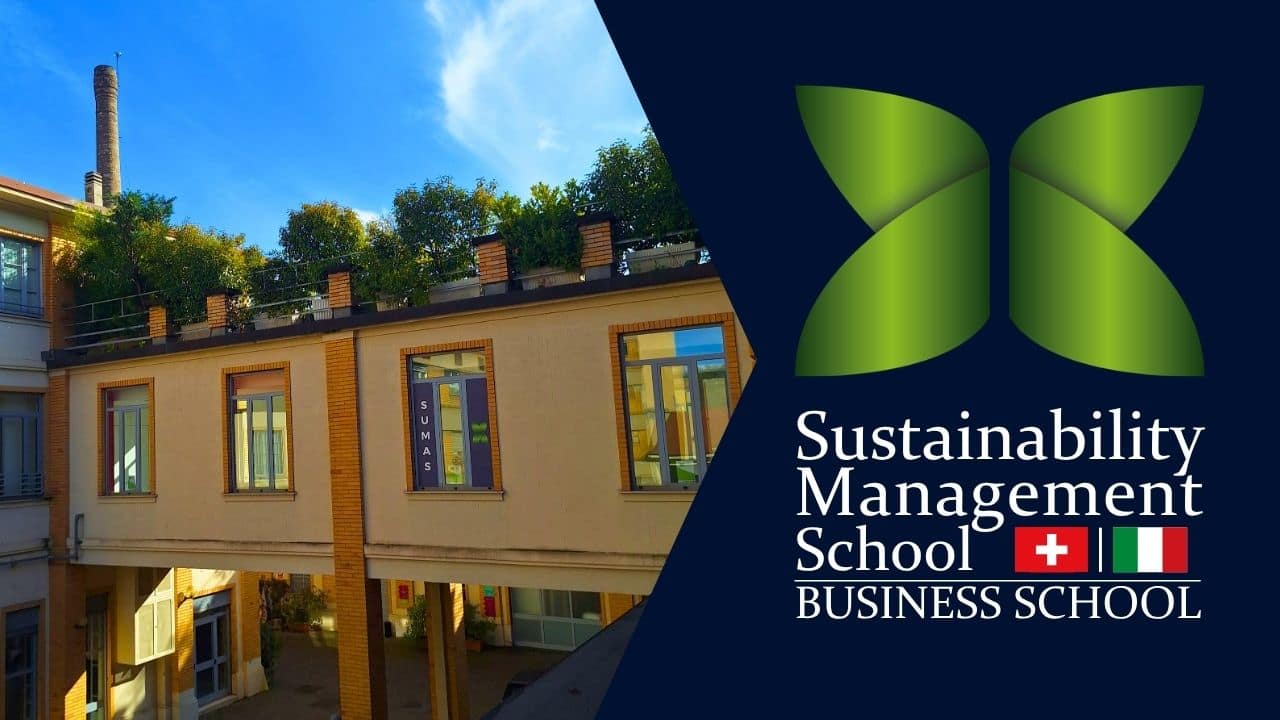
What Is the Green Milan Experiential Camp?
Green Milan is an immersive, cross-disciplinary camp run by SUMAS (Sustainability Management School) in Milan, Italy, that uses the city itself as a living classroom for sustainability management. Held over five themed days, the camp moves students out of the lecture hall and into the field, where they examine how tourism, gastronomy, fashion, urban biodiversity, and event design are being redesigned around sustainability. Green Milan is built on experiential learning: a pedagogy that converts theory into practice and observation into decision-making. The camp is open to students enrolled in a SUMAS program and complements the school's Swiss campus in Gland, on the shore of Lake Geneva. Rather than teaching sustainability as an abstract discipline, Green Milan asks students to study it where it is actually being negotiated, financed, and operated, day by day.
Why Does Experiential Learning Matter in Sustainability Education?
Experiential learning matters in sustainability education because sustainability is a systems discipline: it is lived across supply chains, communities, and ecosystems rather than contained in a single theory. Frameworks such as the circular economy, corporate social responsibility (CSR), and environmental management systems give students a foundation, but a framework only becomes useful when applied to a real constraint, a real budget, or a real trade-off. Experiential learning supplies that context. Seeing how a city negotiates land use, food recovery, or textile waste in practice teaches the messiness that textbooks smooth over. At SUMAS, experiential learning is treated as the pedagogical backbone, not an occasional excursion. Each course and project is designed to expose students to live sustainability challenges and ask them to ideate, collaborate, and lead inside dynamic environments. Green Milan is the most concentrated expression of that approach: a full week of structured immersion in one transforming European city.
What Does Green Milan Cover Across Five Days?
Green Milan structures the week around five distinct sustainability domains, each chosen because Milan offers a credible, observable case study in it. The progression moves from how people travel and eat, through how they dress and inhabit cities, to how cultural and commercial spaces are lit and run. Each day pairs guided observation with hands-on engagement so students leave with applied insight rather than a tour itinerary. The five themed days are:
- Climate-positive tourism: how travel and hospitality can be redesigned to lower carbon intensity and move toward regenerative models.
- Sustainable gastronomy: ingredient sourcing, food-waste reduction, and local food systems explored through hands-on work in the kitchen.
- Sustainable fashion: the lifecycle of a garment, from material sourcing to consumer behaviour, examined in the heart of a global fashion capital.
- Urban nature conservation: how cities protect biodiversity and build climate resilience through green corridors and regeneration.
- Sustainable design for events and culture: how lighting and staging can serve art and architecture while cutting energy use.
How Does the Camp Connect Tourism, Food, and Fashion?
Green Milan connects tourism, food, and fashion because each sector carries a measurable environmental footprint and each is central to Milan's economy. Global tourism accounted for roughly 8.8% of worldwide greenhouse-gas emissions in 2019, reaching about 5.2 gigatonnes of CO2-equivalent, according to a 2024 study published in Nature Communications. The fashion and textile industry is responsible for an estimated 2-8% of global carbon emissions and around 9% of microplastic pollution reaching the oceans each year, according to the United Nations Environment Programme (UNEP). Studying these sectors side by side lets students trace shared root causes, such as overproduction, linear supply chains, and weak material accountability, and shared solutions rooted in circular thinking. The camp's value is in the connections: a single city makes visible how travel, food, and apparel decisions compound into a regional sustainability outcome.
Why Is Milan a Credible Classroom for Sustainability?
Milan is a credible classroom for sustainability because the city has invested in measurable circular-economy initiatives that students can observe directly rather than take on trust. Milan's network of neighbourhood food-waste hubs recovered 795.3 tonnes of surplus food in 2024, a 25% increase on the 615 tonnes recovered in 2023, after expanding from five hubs to eight, according to the EU CAP Network and the Municipality of Milan. These hubs connect surplus from markets, canteens, and retailers with local associations that redistribute it, turning a waste problem into a food-security resource. Milan has also paired this work with urban regeneration, converting former industrial sites into green districts and reinforcing biodiversity corridors. For students, the lesson is that circular-economy policy is not theoretical in Milan: it is staffed, funded, and audited. That observable accountability is exactly what experiential education is designed to surface.
What Skills Does Experiential Learning Build?
Experiential learning builds the practical competencies that sustainability employers consistently look for, because it forces students to act inside real constraints rather than describe ideal ones. Sustainability leadership demands more than intellectual understanding of frameworks; it requires the judgement to apply them when data is incomplete and stakeholders disagree. Working on live cases in tourism, food, fashion, and urban ecology develops a nuanced reading of how sustainability intersects with finance, operations, and ethics. The Green Milan format is designed to strengthen a specific set of capabilities:
- Systems thinking: seeing how a sourcing decision in fashion connects to water, waste, and labour outcomes downstream.
- Stakeholder fluency: communicating with operators, public bodies, and communities who hold different priorities.
- Applied analysis: translating frameworks such as the circular economy and CSR into concrete operational choices.
- Adaptability: working in unfamiliar settings where the answer is not pre-written in a syllabus.
How Does Green Milan Fit Into the SUMAS Approach?
Green Milan fits into the wider SUMAS model as the concentrated, on-location version of a method that runs through the whole curriculum. SUMAS treats experiential learning as the backbone of its teaching, pairing classroom theory with project-based work so that students graduate able to operationalize sustainability, not just define it. The school's main campus sits in Gland, Switzerland, beside Lake Geneva, while the Milan camp extends that classroom into one of Europe's most active sustainability laboratories. The combination is deliberate: a stable academic base in Switzerland and immersive fieldwork in a transforming Italian city. For students weighing where to study sustainability management, the takeaway is that the discipline is best learned where it is being practised, financed, and contested, and that the strongest programs make that immersion a structural feature rather than an occasional field trip.
How Do You Build a Career in Sustainability With SUMAS?
Building a sustainability career with SUMAS means choosing a program that matches the sector you want to lead in, then layering experiential formats like Green Milan on top of it. A student drawn to apparel and circular design fits the fashion track; one focused on hospitality, travel, and destinations fits the hospitality and tourism track; and one seeking a broad strategic foundation fits the general sustainability management route. Each pathway is designed to combine analytical grounding with the applied, field-based learning that the Green Milan camp embodies. The most useful next step is to compare the SUMAS programs below against your own sector interest and career horizon, and to look specifically for how each one builds in live projects, fieldwork, and direct contact with sustainability practitioners.
References & Sources
- Drivers of global tourism carbon emissions, Nature Communications (2024)
- Sustainable Fashion: facts and figures on the industry's environmental impact, UN Environment Programme (UNEP) (2023)
- Milan's Food Waste Hubs Network, European Commission – EU CAP Network (2024)
- Food Policy: surplus food recovered by Milan's Food Aid Hubs, Municipality of Milan (Comune di Milano) (2025)